


 Premium
Want To Destabilize Iran? Rest Assured Something Worse Will Follow
The idea of toppling the Iranian government is idiotic, and even the Arab Gulf states know it, as they are currently begging the Trump White House not to do it.
It would make the disastrous Iraq war look like Disney Land by comparison, and odds are something worse would take the helm of leadership of the Islamic Republic, such as a more hardline IRGC general. This was the obvious trend in Iraq, where the Bush NeoCons fretted over seeing (of all things) a Shia pro-Iran government replace Saddam in Baghdad (still in place till this day).
Also, there was the birth of the Islamic State of Iraq, which later became ISIS, leading to the destruction of Syria as well - resulting in a Syrian al-Qaeda leader (Jolani/Sharaa) now ruling from Damascus.
If there's a US-led overthrow of Iran, the inevitable chaos it would unleash for years or even decades after, would result in something similar: ISIS-style groups would rule where there were none before (Libya too experienced after 'liberation' by NATO). Hardline Shia factions ruling Tehran would counter-attack with an iron fist, and pandora's box would be unleashed. In fact, there have already been major terror attack on Iranian civilians by ISIS terror groups in the region.
Iran, with a largely homogeneous Persian population of over 90 million people, simply ain't no Venezuela. This wouldn't be a 'one and done' operation as with ousting Maduro. And if there's some kind of regime decapitation, with the old governing system still kept in place (like in socialist Venezuela), then it can be assured that someone much more hardline and radical would emerge to lead the country (let's call it revolutionary Shia Islam unleashed...max IRGC style). Currently, in Iran's cities it just so happens that many of the 'protesters' are showing up in the streets well-armed to fire on police and military personnel (the covert Syria 'playbook' against Assad?), as even Israeli media is now admitting.
Yet again, Israeli media is willing to report and admit what is basically taboo in the US.
— Glenn Greenwald (@ggreenwald) January 14, 2026
Israel's Channel 14 revealed that "foreign actors are arming the protesters in Iran with live firearms" and that is why "hundreds of regime personnel [have been] killed.
I wonder what the… https://t.co/hD5PKFSPmE
Surely Washington is not pro-IRGC, but this is exactly what deeper US military intervention would bring: a state of permanent martial law in Iran with the IRGC fully running it out in the open, with no civilian leadership - such as 'center-moderate' Masoud Pezeshkian - in sight.
This would also assure a permanent and ongoing intense state of war between Israel and Iran, turning the whole region into a no-go zone for years to come.
If there were any secret, unknown or deep underground nuclear development facilities left after any potential new US strikes, the IRGC would surely hasten toward an atomic bomb full steam ahead. And with nothing to lose, they'd be much more willing to use it.
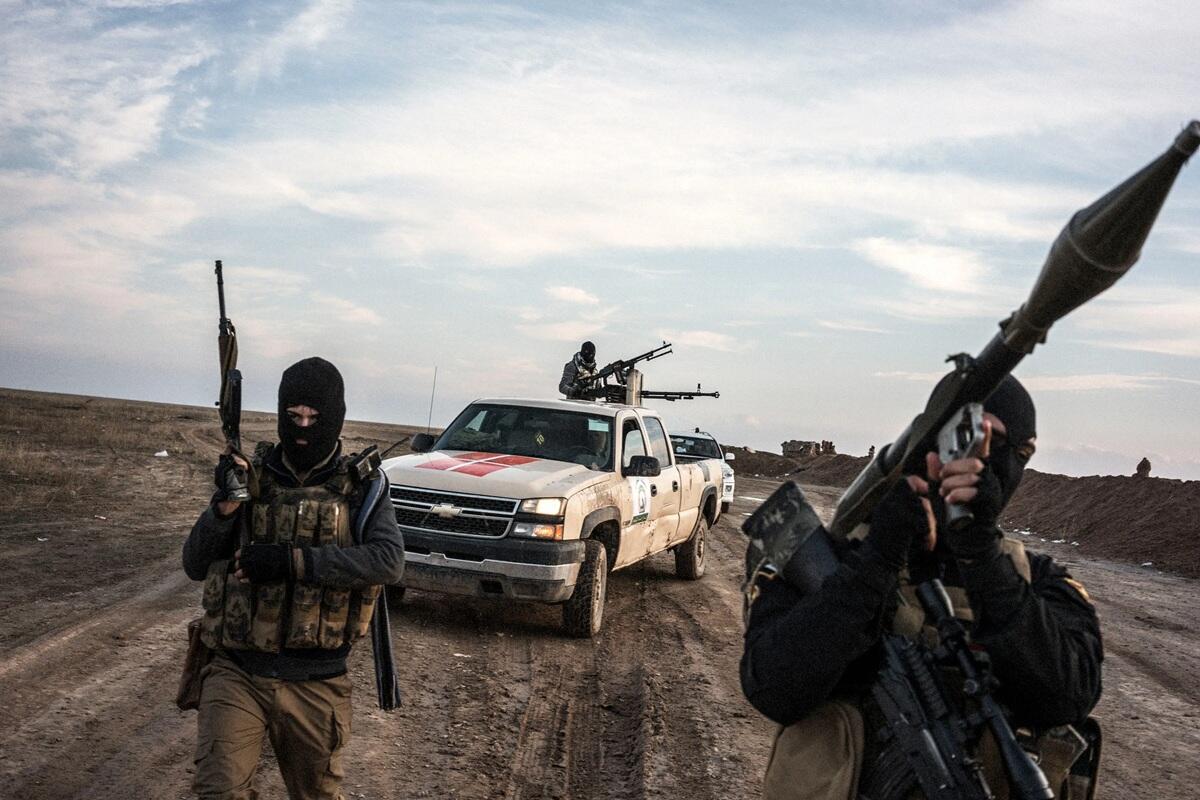
There are some obvious considerations of geography too. Iran shares borders with two countries that Washington spent over two decades expending immense blood and treasure on.
Some kind of serious regime change or destabilization operation in Iran would likely once again tear Iraq apart (given the dominance of the Shia paramilitary groups vs. the persistence of hardline Sunni factions).
Afghanistan too could be impacted, and there's a likelihood that the Taliban would allow fanatical Sunni fighters to flood into Shia Iran. Tehran has long had to deal with pockets of Sunni terror organizations along its border regions, and these often flare-up and prove a headache for state security. There's also the deadly Pakistan corridor...

But again, as mentioned above, Arab Gulf states are privately urging the US not to launch a military strike on Iran, warning it could trigger severe regional instability and disrupt the global oil market.
This according to The Wall Street Journal on Tuesday: "But behind the scenes, Saudi Arabia, Oman and Qatar are telling the White House that an attempt to topple the Iranian regime would rattle oil markets and ultimately hurt the U.S. economy, according to Arab Gulf officials. Most of all, they fear the blowback at home."
Trump can't have it both ways: he wants to drive oil prices down, but this remains an impossibility so long as he threatens Iran with direct military action.
"Arab states fear strikes on Iran risk disrupting oil tankers moving through the Strait of Hormuz, the narrow waterway at the mouth of the Persian Gulf that divides Iran from its Arab neighbors and through which passes around a fifth of the world’s oil shipments," WSJ continues.
"Saudi officials have assured Tehran that they wouldn’t get involved in a potential conflict or allow the U.S. to use their airspace for strikes, in an effort to distance themselves from and stave off U.S. action, according to Saudi officials," the report adds. So even America's Gulf allies are giving a cold shoulder to the possibility of US-led Iran strikes.
Iran has long waged a war on ISIS along its restive border areas. Sunni ISIS hates all Shia 'apostates' - and so would also like to see the Shia theocracy of the Ayatollah fall. Here we are presented with another deep irony: just as in Syria under Assad, ISIS and the US and Israel happen to once again find themselves on the same side of the conflict.

Let's leave off by restating the obvious in the form of a question: has major US military intervention in the Middle East ever gone well?
If Trump attacks Iran, he will once again be siding firmly with the Deep State, and not to mention his foreign pals in Israel (and AIPAC), over and against the will of the American people.