

What Makes President Trump Tick?
Donald Trump’s Economic Instincts Come From Who He Is
Authored by GoldFix
Good Morning; Had a long and very pleasant conversation with Tom Luongo recently and naturally, Donald Trump’s policies were a major part of that discussion. At the same time, more and more people have been asking how to view Trump’s policy decisions in context of his economic approach as a “classic corporatist”.
Between that conversation with Tom and the questions that keep resurfacing, the following might be useful for anyone who wants a clearer framework that has served well for understanding President Trump’s policies and behavior.
A look at the business life that shaped Trump's instincts and Presidential Policies.
Trump comes from an older American tradition. The corporatist tradition in its original industrial sense. The builders of railroads, steel, oil, and manufacturing. The people who believed nations grow by producing real things, not by rearranging financial claims.
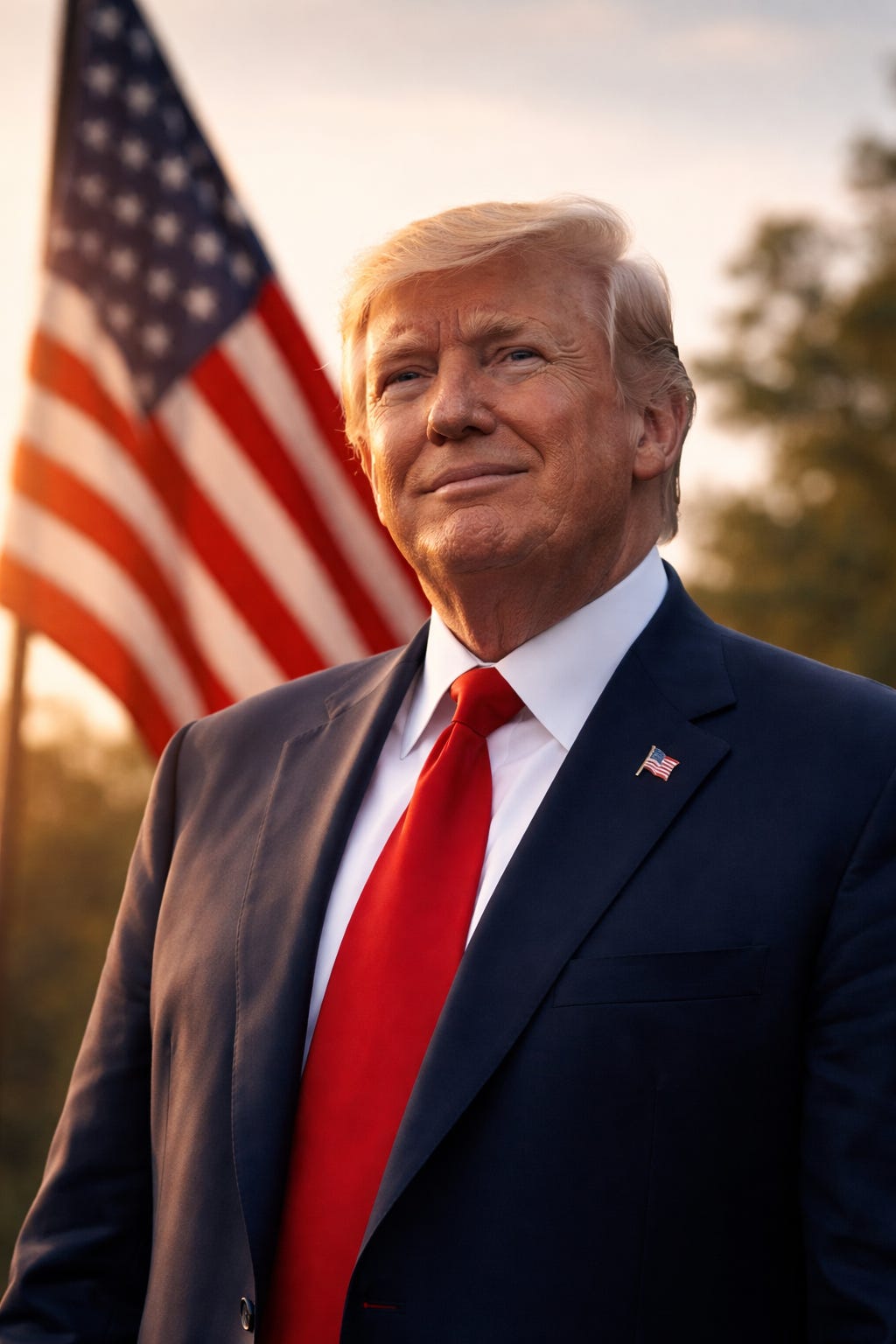
Corporatists are not to be confused with libertarians. They understand that government will always shape business. Their goal is not to eliminate government, but to work with it in a way that protects domestic industry. They dislike taxes, but they also dislike shrinking their workforce. They believe labor produces something tangible. There is pride in building. Ultimately they are patriots.
If a corporatist must choose between paying higher taxes or paying higher wages, he chooses wages. Employees create output. Taxes do not. Growth matters more than accounting margins.
The man really hates finance.. classic corporatist to the damn bone.https://t.co/u4aozxgOPn pic.twitter.com/r93IWcHv3w
— VBL’s Ghost (@Sorenthek) January 10, 2026
Trump inherited that mindset from his father. But his version came with a structural challenge. His family business was real estate.
When globalization reshaped the economy in the 1970s and 1980s, industrial corporatists could move. Manufacturing, steel, and production went overseas. They partnered with finance and expanded globally. Real estate could not follow. You cannot outsource housing. You cannot export a building.
So while other corporatists became global, real estate corporatists remained domestic. Trump tried to adapt. He expanded into airlines, casinos, hotels, and golf courses. Some ventures succeeded. Many did not. When the system turned against him, finance did not protect him the way it protected global industrial families. He went bankrupt more than once.
Then housing policy changed. Credit expanded. Ownership became a national priority. Trump prospered again. For a time, finance finally worked in his favor.
Then came 2008.
Mortgage engineering and excessive leverage collapsed the system. Lending froze. Real estate fell again. Trump blamed finance, not government. Once again, he survived through branding, television, and licensing.
That sequence matters.
He was raised by a corporatist father. Trained to distrust finance. Left behind by globalization. Revived by government housing policy. Then damaged again by financial excess.
That man eventually became president.
And he governs in ways that reflect that history.
He challenges the Federal Reserve.
He favors fiscal authority.
He speaks for manufacturing.
He questions Wall Street profitability.
He talks about production, not leverage.
When he proposes capping credit card interest at ten percent; It reflects a belief that finance should serve people and industry, not dominate them.
Trump has never believed finance alone builds nations. He believes industry does. He believes work does. He believes production does.
The United States is slowly shifting away from financial globalization and back toward domestic production. Whether one agrees with every Trump policy or not, he is aligned with that transition. His objective is to make the country more self-sufficient, more productive, less leveraged, and less dependent on financial engineering.
There is risk in this. Real risk. We are changing the engine of a moving car. If finance contracts too quickly, there will be consequences. There will be volatility. There will be adjustment.
But Trump’s behavior is not random.
It is neither emotional.nor incoherent.
It follows a logic shaped by his upbringing, his business life, and his long conflict with financial power.
This does not make him perfect or beyond criticism.
But it does make him understandable.
Trump reveals some realpolitik reason for Greenland
— VBL’s Ghost (@Sorenthek) January 10, 2026
(@TFL1728, the world is completely and irrevocably splitting post Ukraine war.
Vid: @WSBGold pic.twitter.com/gLqwGbuocS
And for supporters, understanding that logic is often what explains why his instincts feel familiar, consistent, and grounded in something deeper than politics. Critics on both the left (sclerotic progressives) and right (Libertarian do nothings) cannot see that.
Tremendous risks notwithstanding, Trump is the right man for the world we live in now.
More here
Free Posts To Your Mailbox