


The AI Cake: Five Layers of Power
Artificial Intelligence is spoken of everywhere yet understood nowhere. In the markets of today, its name is repeated so often that meaning is worn thin, like a coin passed through too many hands. Many speak of it as mere software, or as a single object to be bought, banned, regulated, or conveniently “priced in.” This is the error of mistaking the leaf for the tree.
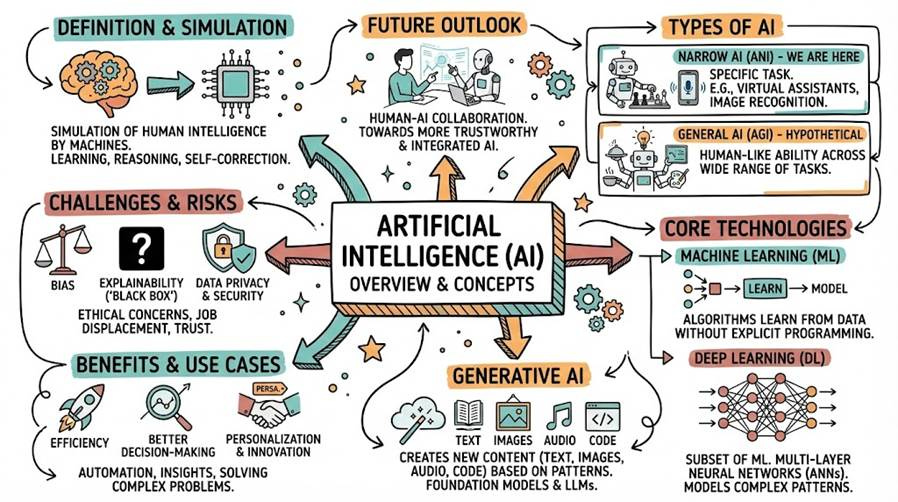
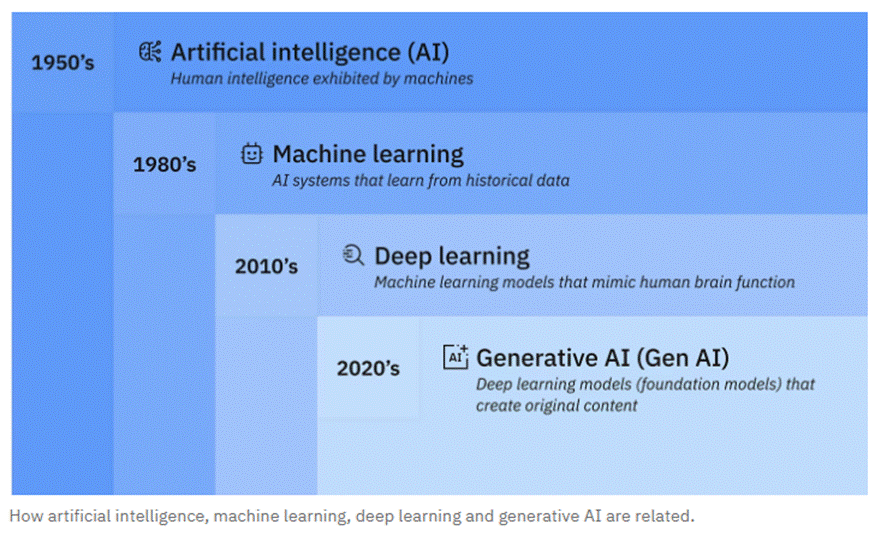
Think of AI as a set of Russian dolls, except they’ve been nesting for 70 years and none of them came with instructions. At the outer shell sits Artificial Intelligence. Open it, and you find machine learning: the art of teaching machines to learn from data instead of screaming explicit instructions at them like an intern on day one.
Machine learning comes in many flavours — linear regression, decision trees, random forests, SVMs, KNNs — a zoo of algorithms, each good at its own trick and terrible at someone else’s. No single beast rules them all.
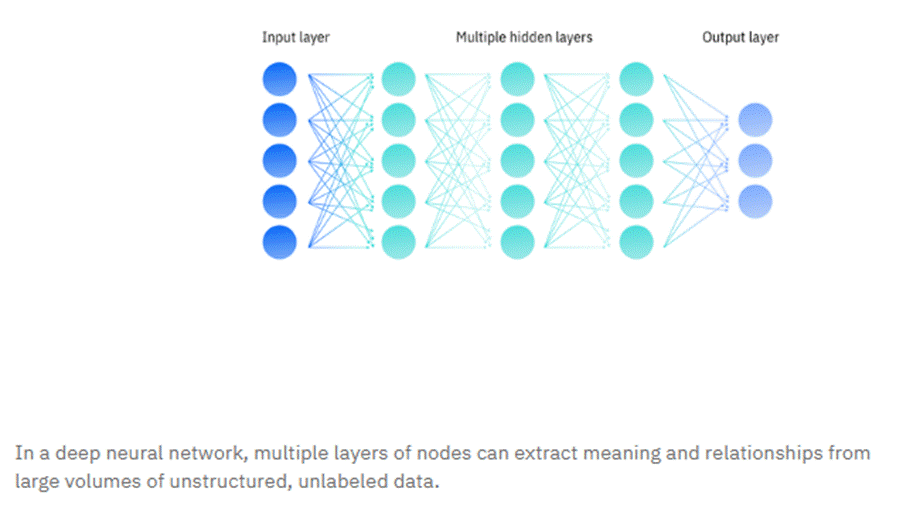
Then comes the crowd favourite: neural networks. Inspired by the human brain (with fewer existential crises), they stack layers of artificial neurons to spot patterns in oceans of data. When the data gets big and messy, neural networks shine.
At the very bottom sits supervised learning — the kindergarten of AI. Humans lovingly label the data (“this is a cat,” “this is not”) and hope the machine learns well enough to recognize cats on its own later. When it does, we call it intelligence. When it doesn’t, we call it a data problem.
https://www.ibm.com/think/topics/artificial-intelligence
Deep learning is machine learning that went to the gym, got layered, and stopped asking humans for help. Instead of a couple of neural network layers, it stacks dozens — sometimes hundreds — of them, vaguely inspired by the human brain, but with better memory and no coffee breaks. These deep networks don’t need neatly labelled data to get started. They dig through massive piles of messy, unlabelled information, figure out what matters on their own, and then confidently tell us what they think it all means. Sometimes they’re right. Often enough, we keep funding them.
Because humans are no longer in the loop, deep learning scales fast — absurdly fast. That’s why it dominates language models, image recognition, and anything involving pattern-hunting at industrial speed. In short: if AI is everywhere today, deep learning is the reason — quietly humming in the background, burning electricity, and pretending not to notice us.
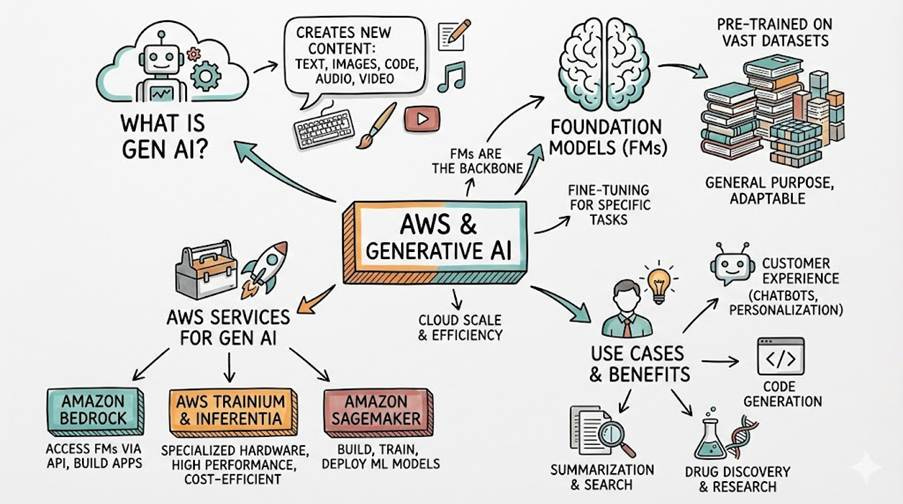
Generative AI is deep learning with a creative streak: give it a prompt, and it writes essays, paints pictures, composes music, or pretends it always knew the answer. It works by compressing vast amounts of past data into a statistical memory, then remixing it into something new — familiar enough to feel smart, different enough to feel original.
Under the hood, it’s powered by a trio of heavy hitters: VAEs, which offer multiple variations like a polite waiter; diffusion models, which destroy images with noise just to rebuild them better; and transformers, the real celebrities, stitching words, pixels, or code into long coherent sequences. Training these models is slow, expensive, and GPU-hungry — think weeks of computation and millions in electricity — after which humans step back in to fine-tune, correct, and occasionally argue with them. The result is an AI that keeps learning, keeps adjusting, and increasingly behaves like a tireless intern who never sleeps, never complains, and somehow still needs constant supervision.
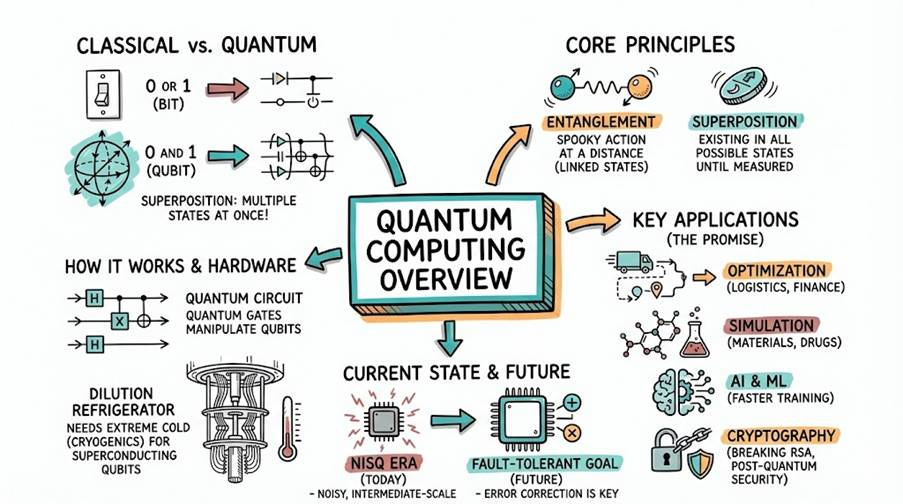
Quantum computing is often invited into AI conversations like a mysterious genius cousin from another country — impressive, exotic, and completely unnecessary for tonight’s dinner. Today’s AI boom runs just fine on classical computers, scaled to ridiculous proportions and powered by very unglamorous electricity bills. No quantum magic required. Yes, quantum computing is real, fascinating, and based on the universe’s strangest habits — particles in multiple states, spooky long-distance relationships, and calculations that collapse the moment you look at them. One day, it may revolutionize chemistry, materials, cryptography, and a few very specific problems where classical computers age visibly while waiting for answers. But it is not a prerequisite for AI, nor a missing layer in the AI cake. Treating it as such is mostly a storytelling device: useful for selling future miracles today, far less useful for generating cash flows before the heat death of the universe.
The wise do not bow to appearances. AI is neither a talking box, nor a dancing stock price, nor a charm that summons riches on demand. It is the disciplined automation of judgment — trained, not programmed — and it stands on layers of metal, energy, and capital long before it flatters us with language. Large language models are merely the polite doorkeepers, impressive but shallow if the house behind them is poorly built. Those who chase the visible marvels trade shadows; those who study the foundations quietly acquire the substance, and usually the returns, as well.
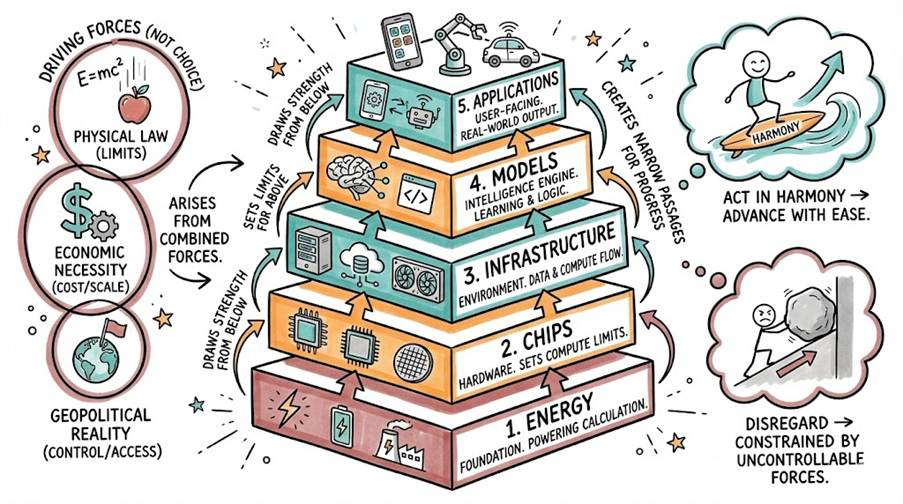
For this reason, the rockstar CEO of NVIDIA spoke at the World Economic Forum in 2026 of AI as a five-layer cake. He did not speak in jest, nor in poetry, but in structure. Remove one layer, and the whole collapses; adorn the top while neglecting the base, and what remains is an illusion suspended in air.
The advance of AI does not dwell in clouds but in power stations, semiconductor foundries, data halls, cables beneath the seas, supply routes, and points of geopolitical tension. Before one examines the layers themselves, wisdom demands a prior step: to understand clearly what AI is — and to set aside, with equal clarity, what it is not.
All enduring systems are built according to order and balance. The structure of AI rests upon five interdependent layers: Energy, Chips, Infrastructure, Models, and Applications. Each layer draws its strength from the one beneath it, sets the limits of the one above, and creates the narrow passages through which progress must move. This order is not a matter of choice or imagination. It arises from physical law, economic necessity, and geopolitical reality combined. Those who act in harmony with this structure advance with ease; those who disregard it find themselves constrained by forces they do not control.
Read more and discover how to trade it here: https://themacrobutler.substack.com/p/the-ai-cake-five-layers-of-power
Visit The Macro Butler Website here: https://themacrobutler.com/
Join The Macro Butler on Telegram here : https://t.me/TheMacroButlerSubstack
You can contact The Macro Butler at info@themacrobutler.com

Disclaimer
The content provided in this newsletter is for general information purposes only. No information, materials, services, and other content provided in this post constitute solicitation, recommendation, endorsement or any financial, investment, or other advice.
Seek independent professional consultation in the form of legal, financial, and fiscal advice before making any investment decisions.
Always perform your own due diligence