

AI Capex Overheated
Welcome to MktContext! I am a professional money manager, trader, and investor who has been timing and beating the market for over a decade. We specialize in predicting market direction by studying the economy and market signals. Join 12,000 subscribers at MktContext.com for our weekly deep dives and analysis!
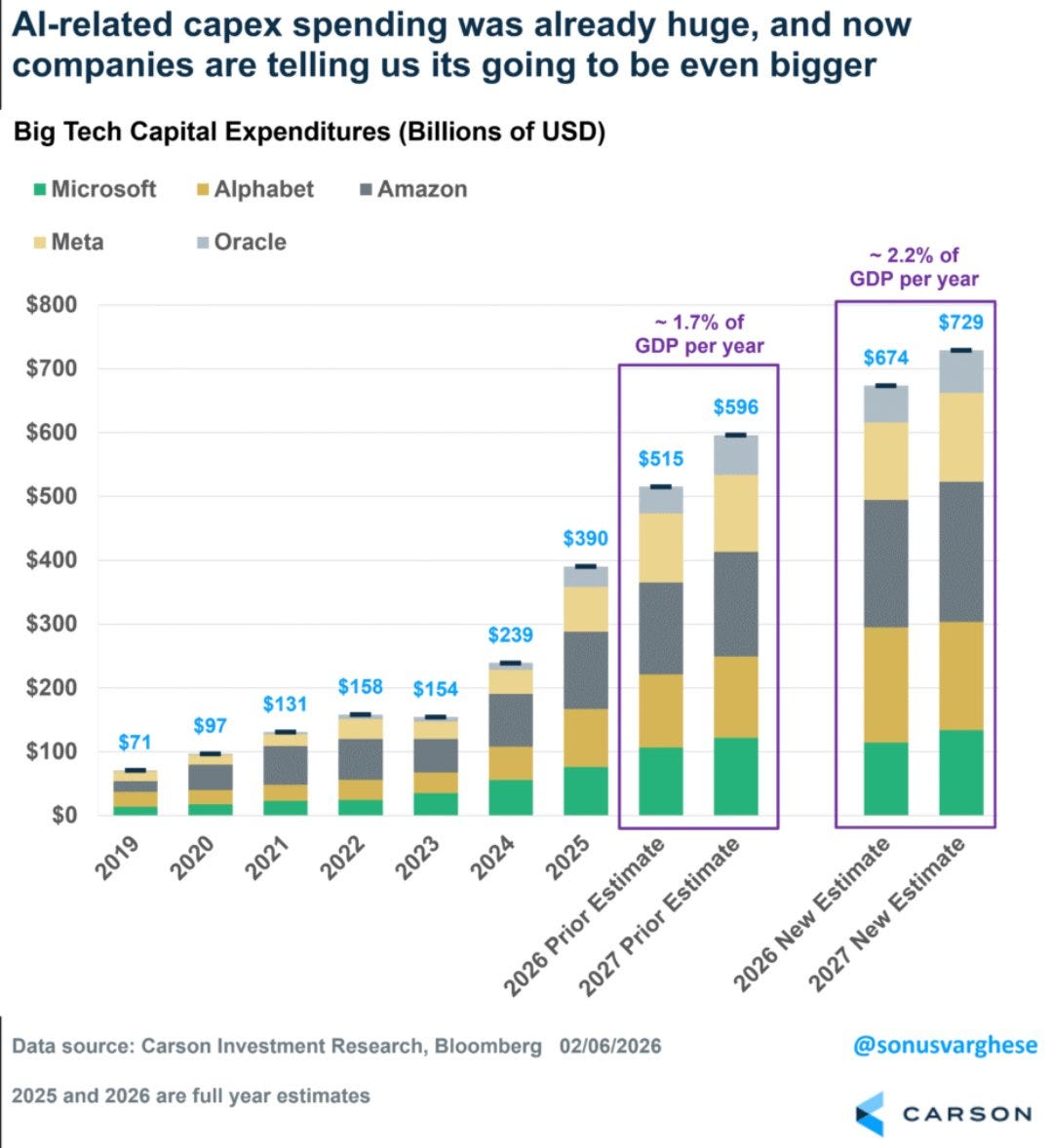
For the mega cap tech stocks, the market cycles between “more capex is good” and “too much capex is bad”. The current narrative is the latter, evidenced by negative stock price reactions to recent announcements by hyperscalers. Capex budgets have been aggressively increased for the coming year, and are now set to make up 2.2% of GDP:
Google co-founder Larry Page was quoted saying “I’m willing to go bankrupt rather than lose this race.” In case it wasn’t already clear, this is not AI hype; it’s capital war.
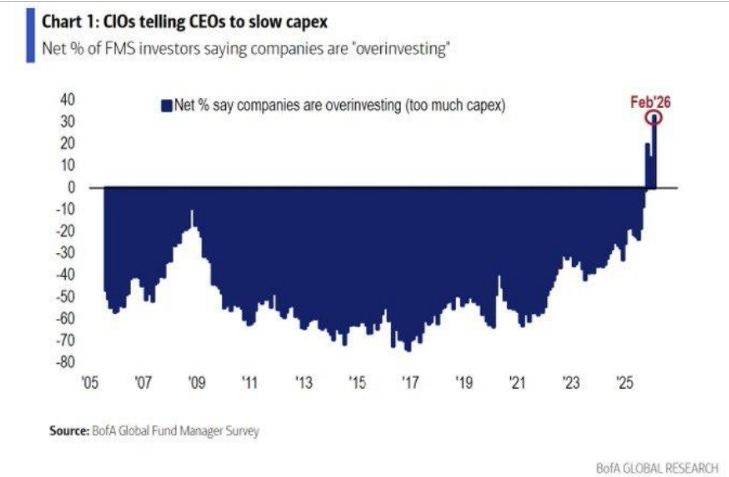
Capex spending is only good when it can generate a profit. Investors push back on spending when ROI is questionable, and not enough to justify growth ambitions. This is what led to the selloff in Oracle (ORCL) which is down -60% from highs. As shown in the chart below, investors want companies to slow down capex:
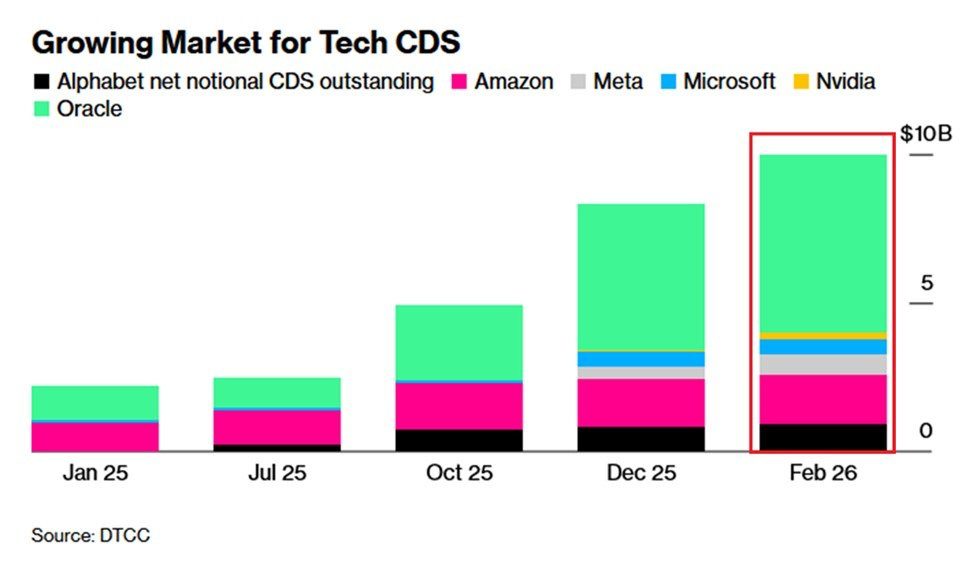
We also see this response in CDS markets, which are insurance policies against bond defaults. Big tech companies issued $100B of bonds so far in 2026, and investors demanded record protection against it. That signals investors’ appetite to fund the capex train. At some point, the market maxes out of capacity to absorb any further debt, creating refinancing troubles down the road.
As technology progresses and Chinese competition remains ever-present, the capex becomes ever-harder to justify. Moore’s law says that things should be getting cheaper, not more expensive. It is likely that big tech companies will soon start walking back their capex plans in light of investor reactions.
Here's our contrarian thesis: The capex walk-back is going to follow soon. This will lift all Mag 7 stocks and therefore the Nasdaq as well...
Continue reading at MktContext.com to see our trades and portfolio.
Join 12,000+ macro investors who get these insights before the mainstream media catches on!