


VLCC rates above COVID highs. Jet fuels hit record highs
Still no escorts
The US Navy has refused near-daily requests from the shipping industry for military escorts through the Strait of Hormuz, per Reuters.
The US Navy says the risks of attacks is "too high" for now. The US Navy has held regular briefings with shipping and oil industry counterparts. During those briefings, the US Navy has said it is still unable to provide escorts for the time being. Sources say that as of Tuesday's briefing, this risk assessment has not changed. The Strait of Hormuz remains largely closed.

Hormuz -97%
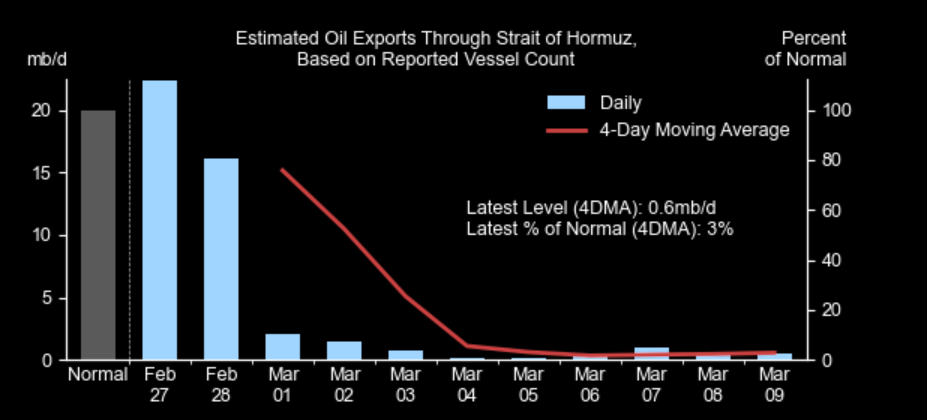
Estimated oil flows through the Strait of Hormuz (SoH) based on reported vessel counts are down 19.4mb/d to 0.6mb/d (4-day moving average).
Source: S&P Global Commodities at Sea
15x larger than the Russian hit
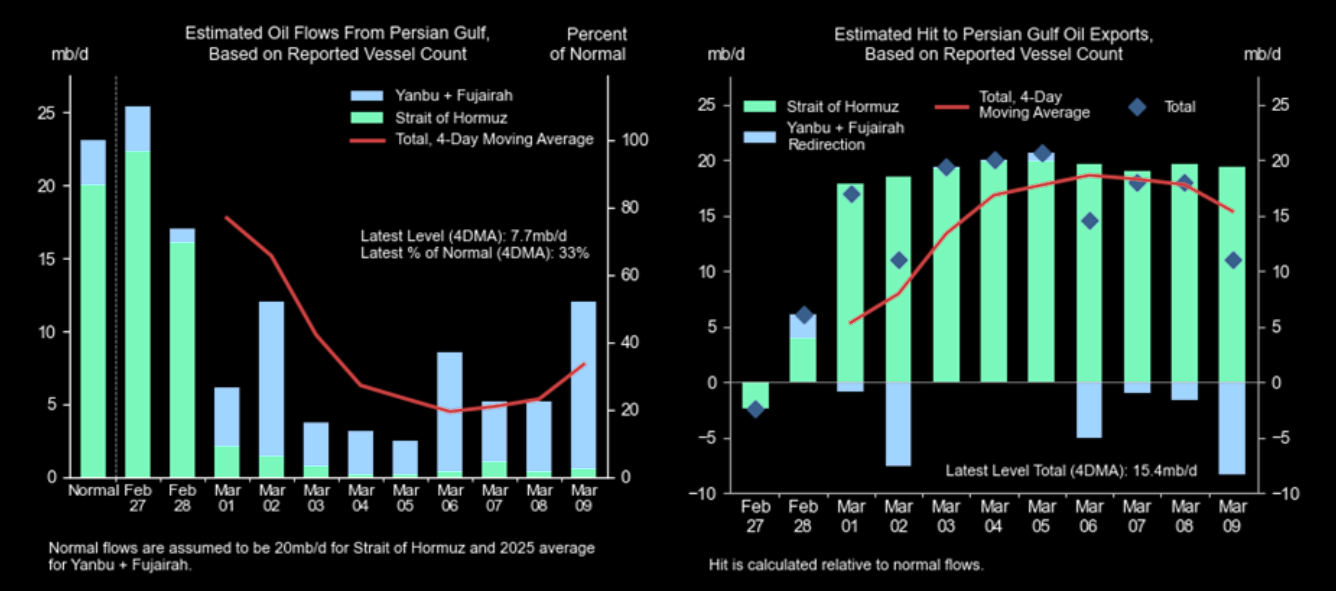
The estimated total hit to Oil flows from the Persian Gulf stands at 15mb/d (15 times larger than the peak April 2022 hit to Russia Oil production).
Source: S&P Commodities
Polymarket predictions
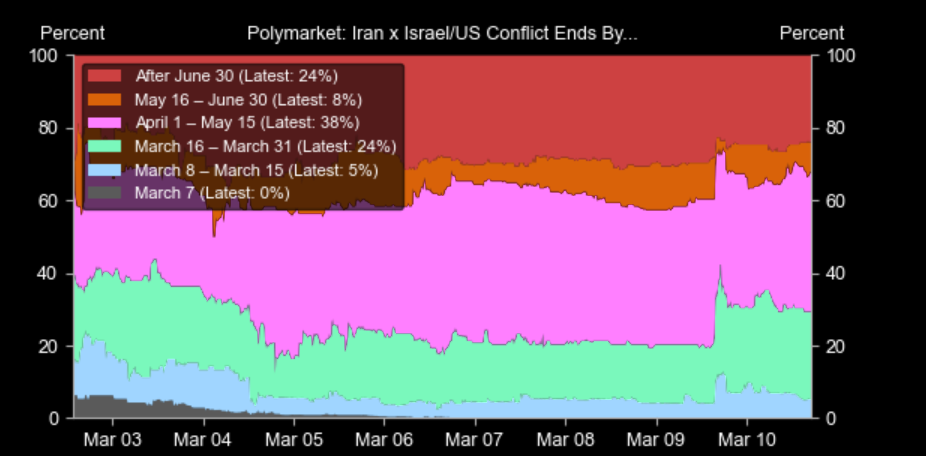
Polymarket is now the "wisdom" for when the conflict ends.
The Polymarket-implied probability the conflict ends in March has risen near 30% - although the Polymarket's base case remains that the conflict ends between April 1 and May 15 (38%).
Source: Polymarket
VLCC rates on offer above covid highs
VLCC rates ($/bbl), Ras Tanura to Ningbo (270kt) and Rotterdam (280kt) - note Tuesday prices.

Source: Clarkson
NWE jet fuel cracks hit record highs
Roughly doubling jetfuel prices. Chart shows NWE vs. US gulf coast jet fuel crack spread ($/bbl) - Tuesday prices.

Source: Datastream
Marine fuel prices roughly doubled
Rotterdam and Singapore VLSFO Bunker Prices ($/tonne).

Source: Clarksons Research
Back up in the air
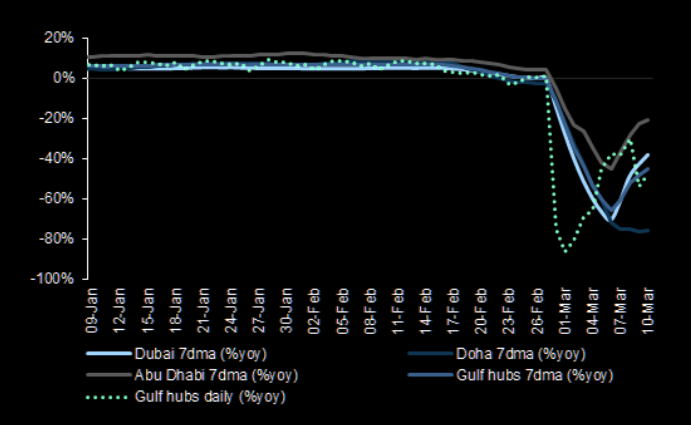
About half of the initial decline in traffic volumes to/from the Gulf recovered in recent days.
Source: Flight Aware
More on the flights
10 March: Qatar Airways operated the most flights since the start of the war, while flydubai approached 50% of capacity. Others operating slightly fewer flights on Tuesday.
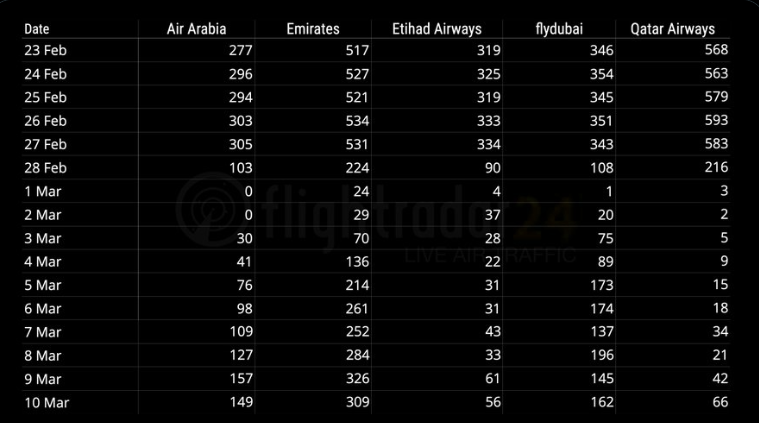
Source: Flight Radar 24
Drone interception
The UAE published figures regarding Iranian missile/drone interception rates since the start of the war. The UAE maintained a relatively good interception rate of both drones and missiles, until yesterday. Iran began using its Shahed drones in a pattern that confused and degraded air defense systems in the gulf. As a result, we saw a spike in impacts.