

From War To Wheat: Hormuz Disruption Ignites Food Inflation Fears
War for longer
The market is starting to price a conflict that lasts longer than many expected. Prediction markets now see almost a 50% probability that there will still be no ceasefire by the end of next month, keeping energy markets, fertilizer supply and food inflation firmly in focus. The ripple effects are already showing up across commodities, inflation swaps and rates.
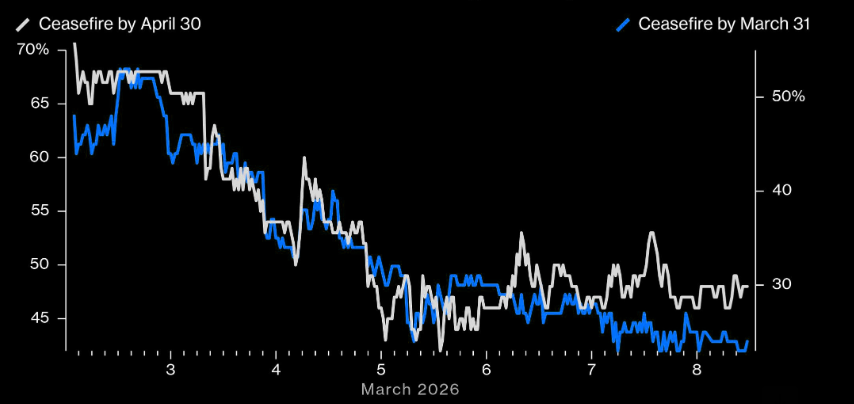
Source: Bloomberg/Authers
Epic
Truly epic this time around. Traffic through the Strait of Hormuz has essentially dropped to zero.
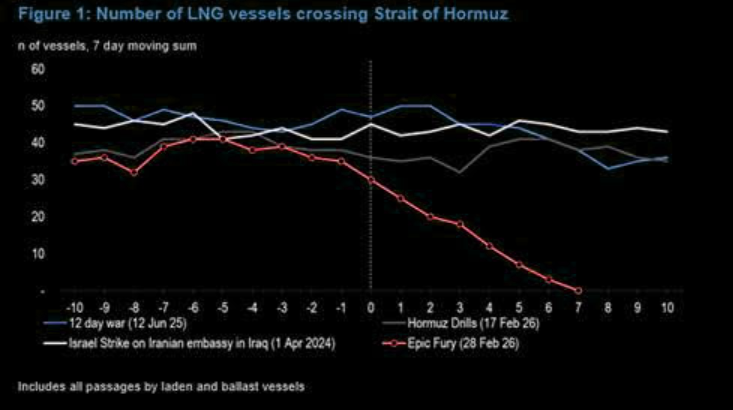
Source: JPM
Urea
Gas is the main input for ammonia → ammonia becomes urea. When gas prices rise, fertilizer production becomes expensive → urea prices spike.
Roughly 45% of global urea trade comes from producers in the Persian Gulf and is shipped to major import regions such as India, Europe and Brazil via the Strait of Hormuz.
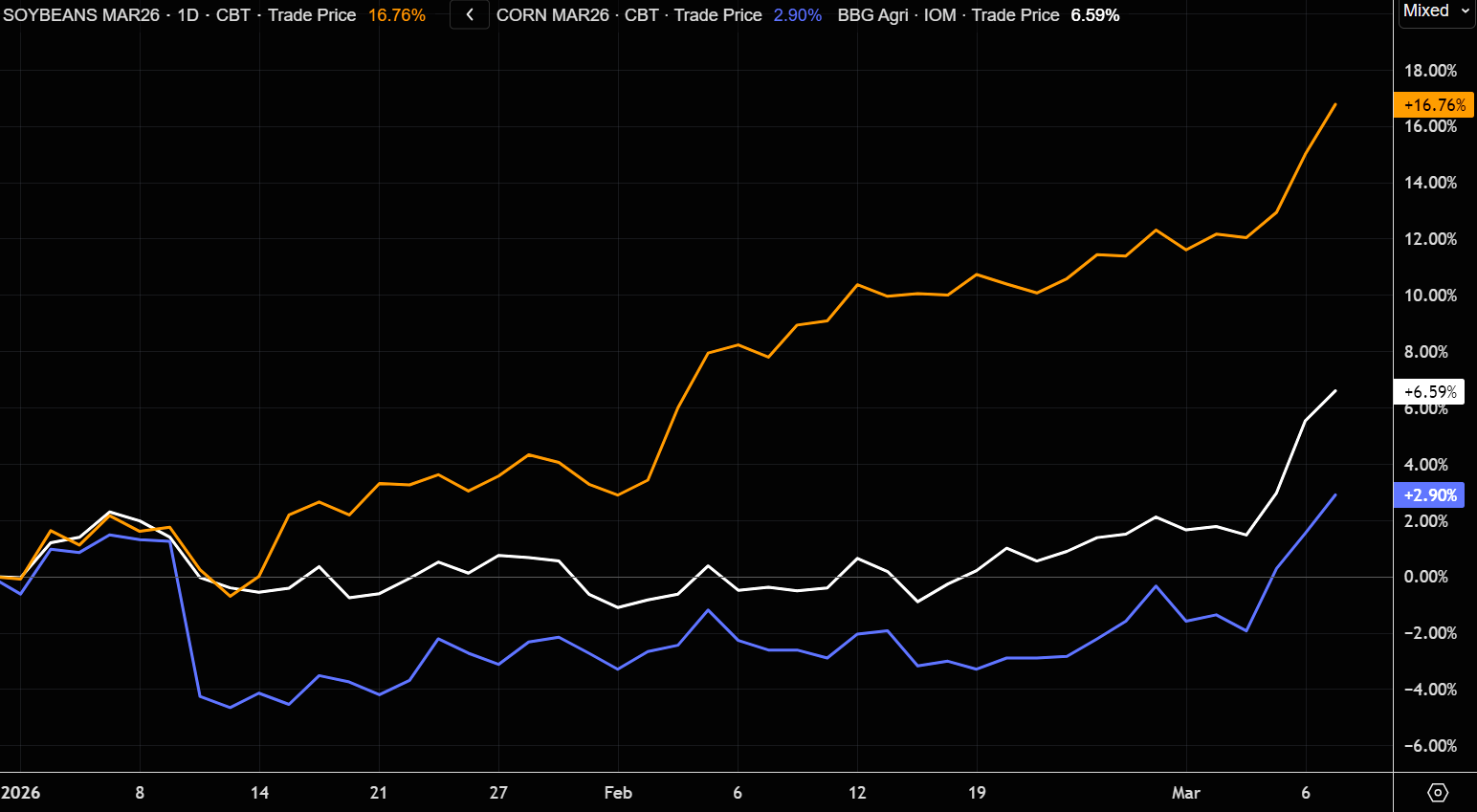
Food prices about to surge, and people need to eat. From the top; soybeans, Bloomberg agriculture sub index and corn (in %).
For US consumers, the affordability squeeze could worsen, the last thing the Trump administration wants ahead of the November midterms. Food prices had begun stabilising, and a renewed rise would be unwelcome writes Bloomberg's John Authers.
Source: LSEG Workspace
Spiking
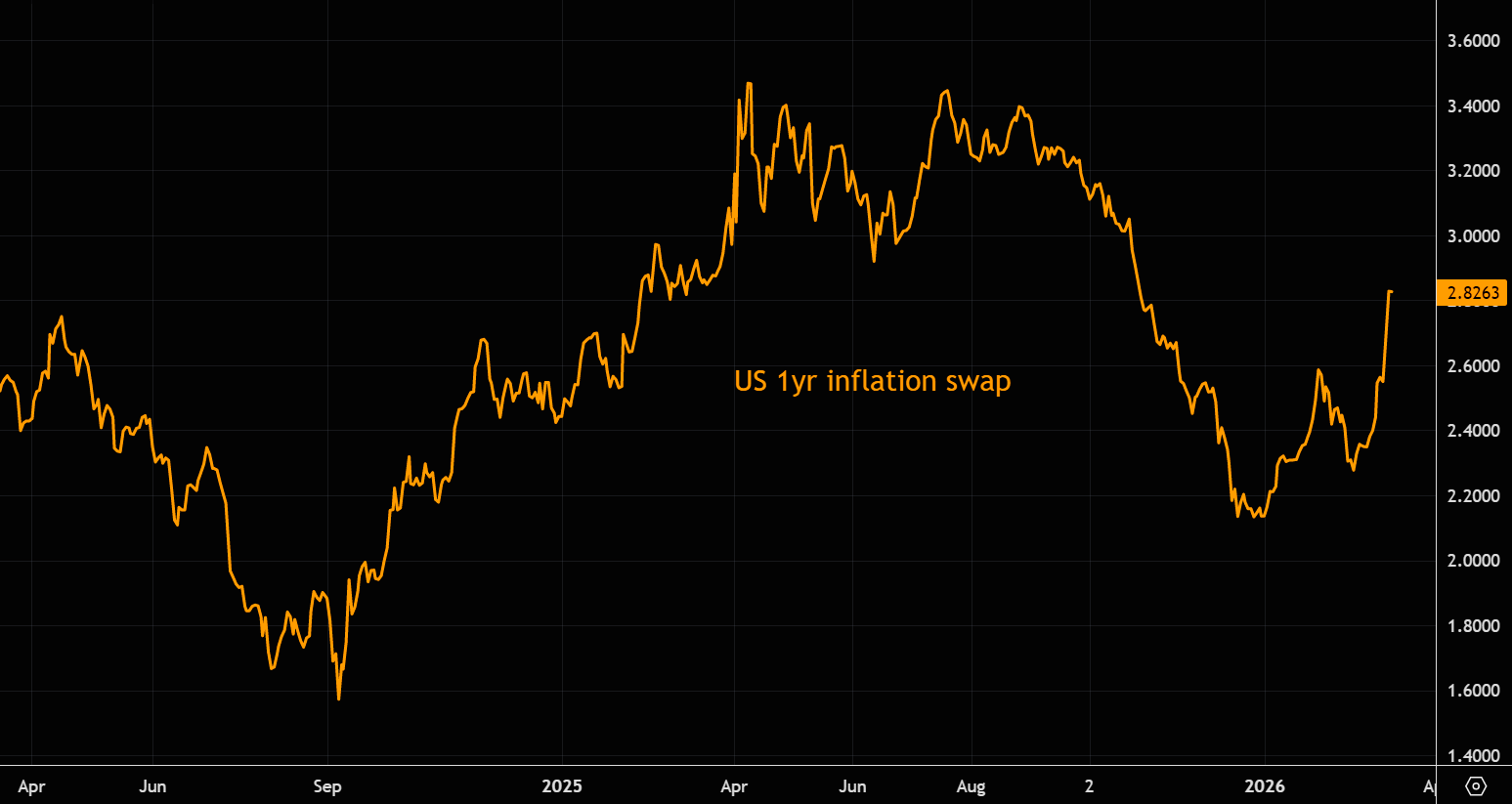
1-year inflation swaps are spiking.
Source: LSEG Workspace
Exploding BCOM
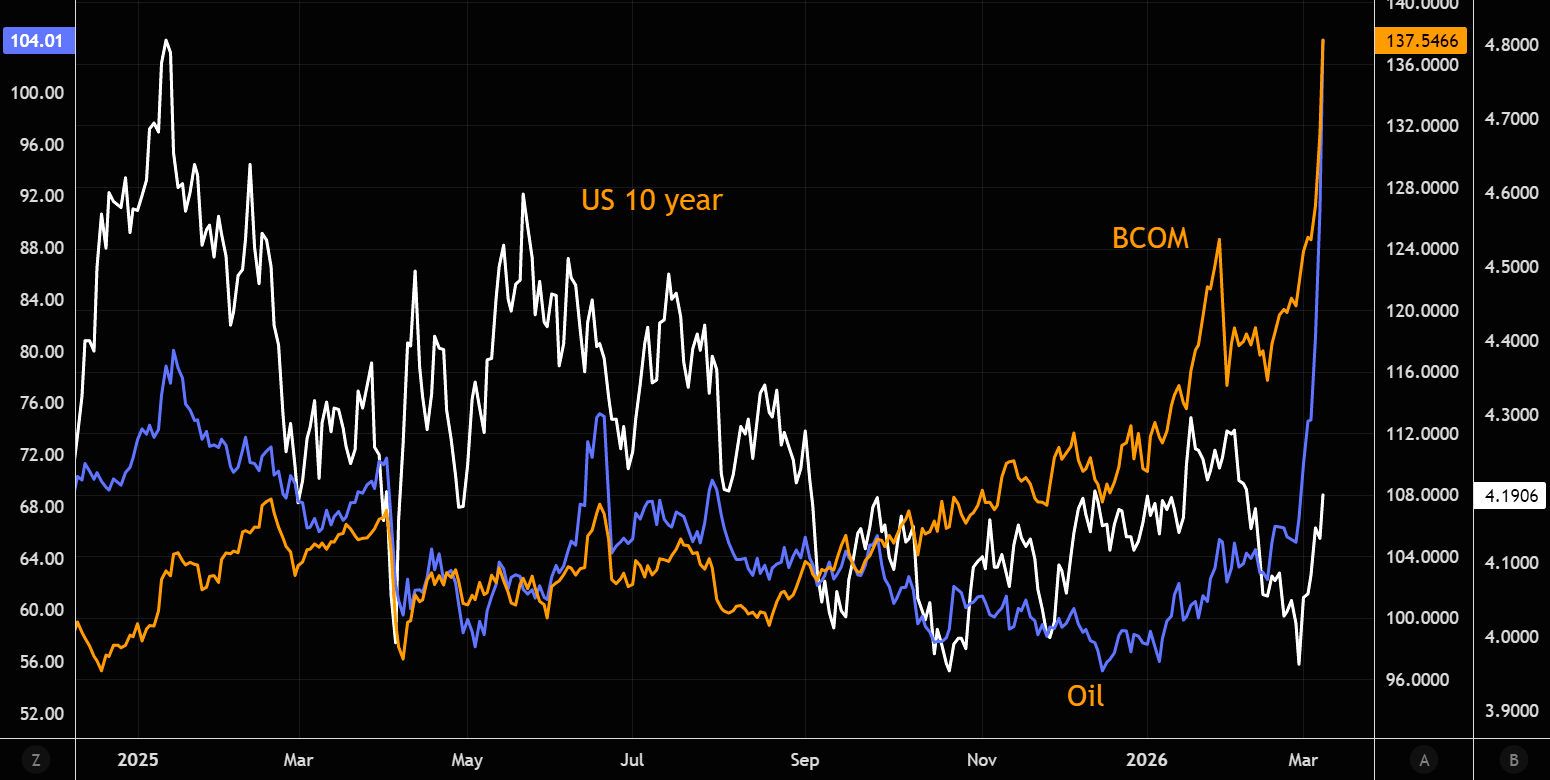
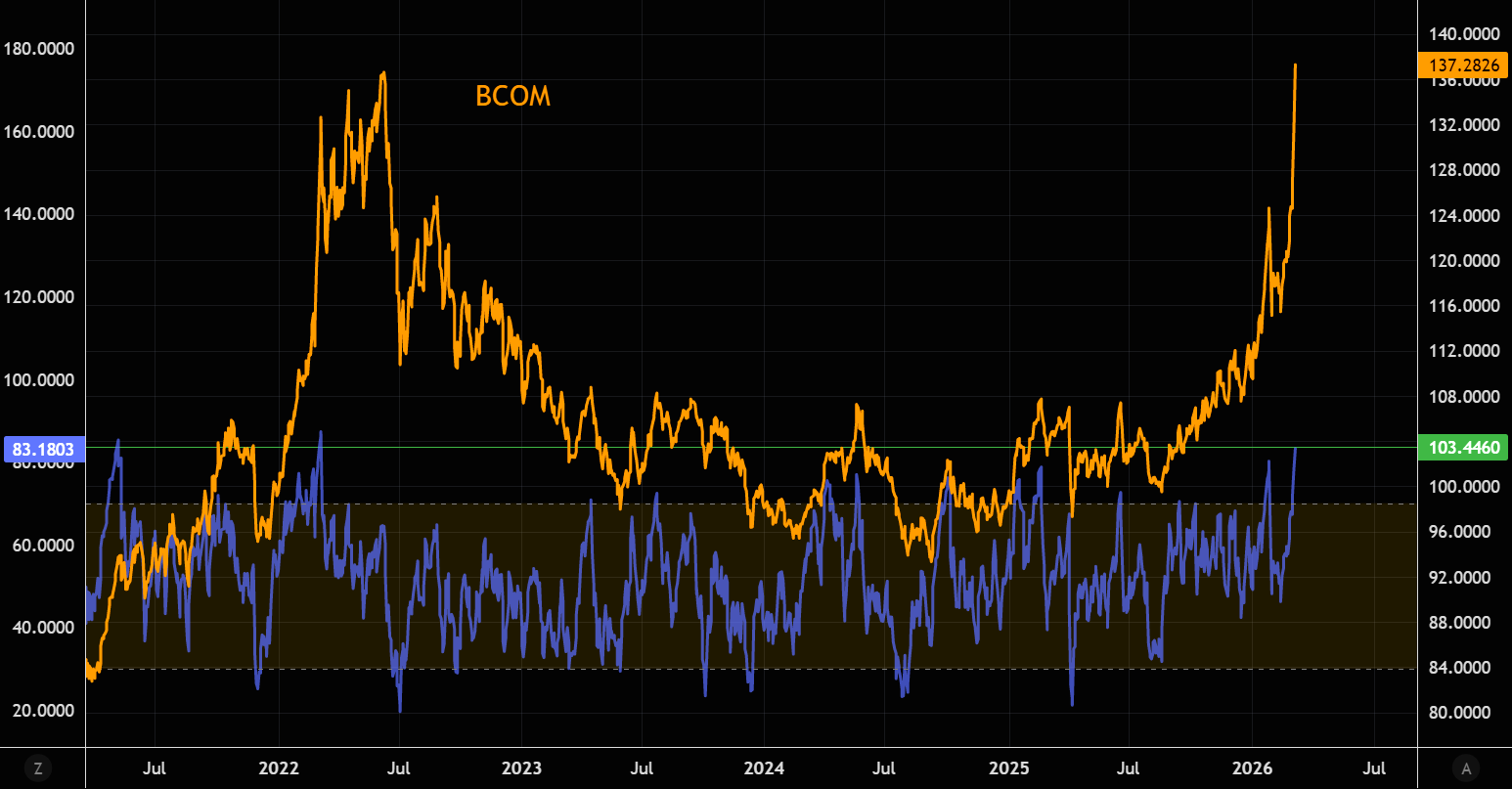
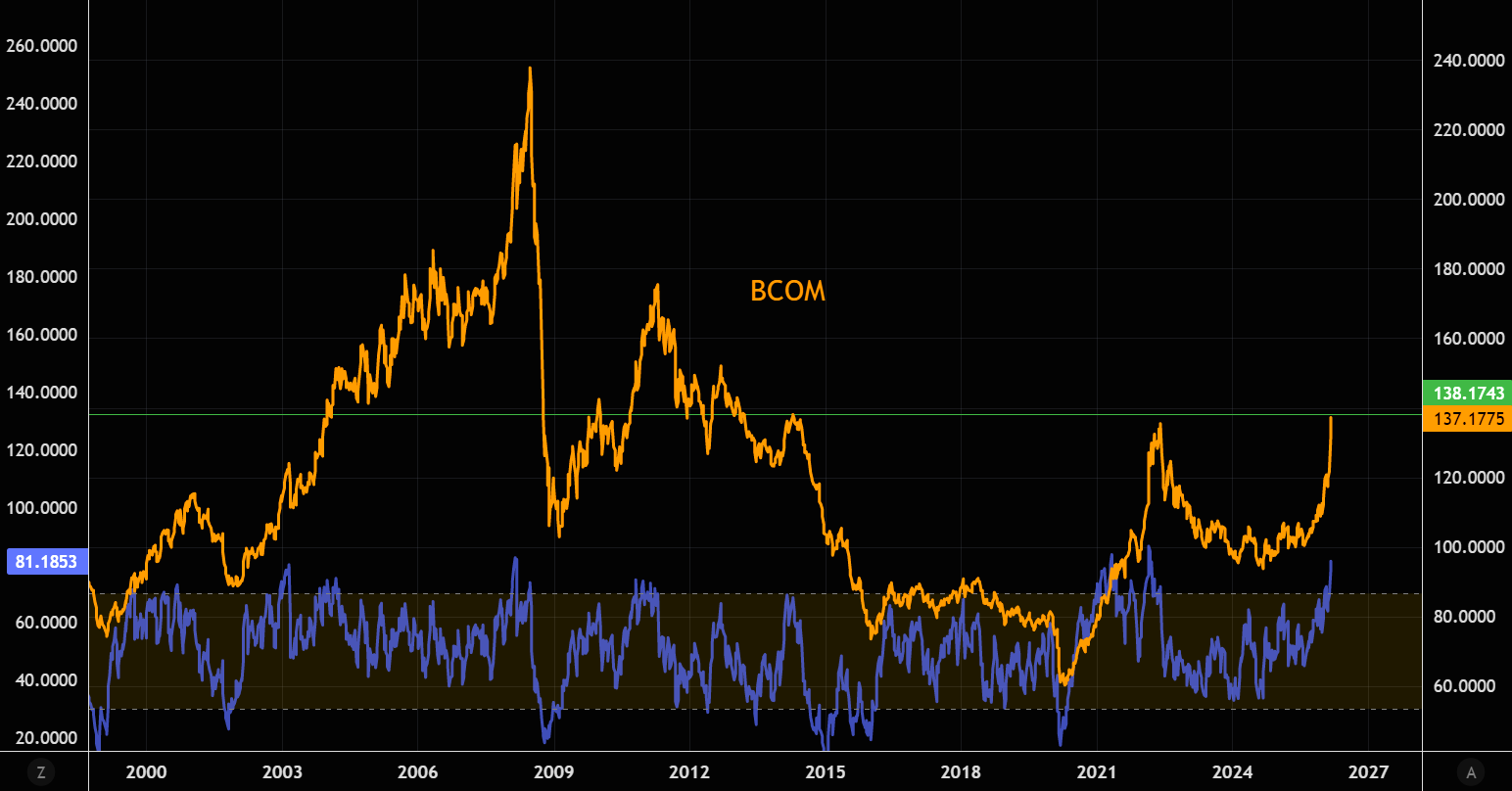
BCOM is at its most overbought levels since 2022, with the index now surpassing the highs from that year. The weekly chart shows BCOM stretched near a major resistance zone, but a close above ~140 would push the index into largely uncharted territory.
Source: LSEG Workspace
Source: LSEG Workspace
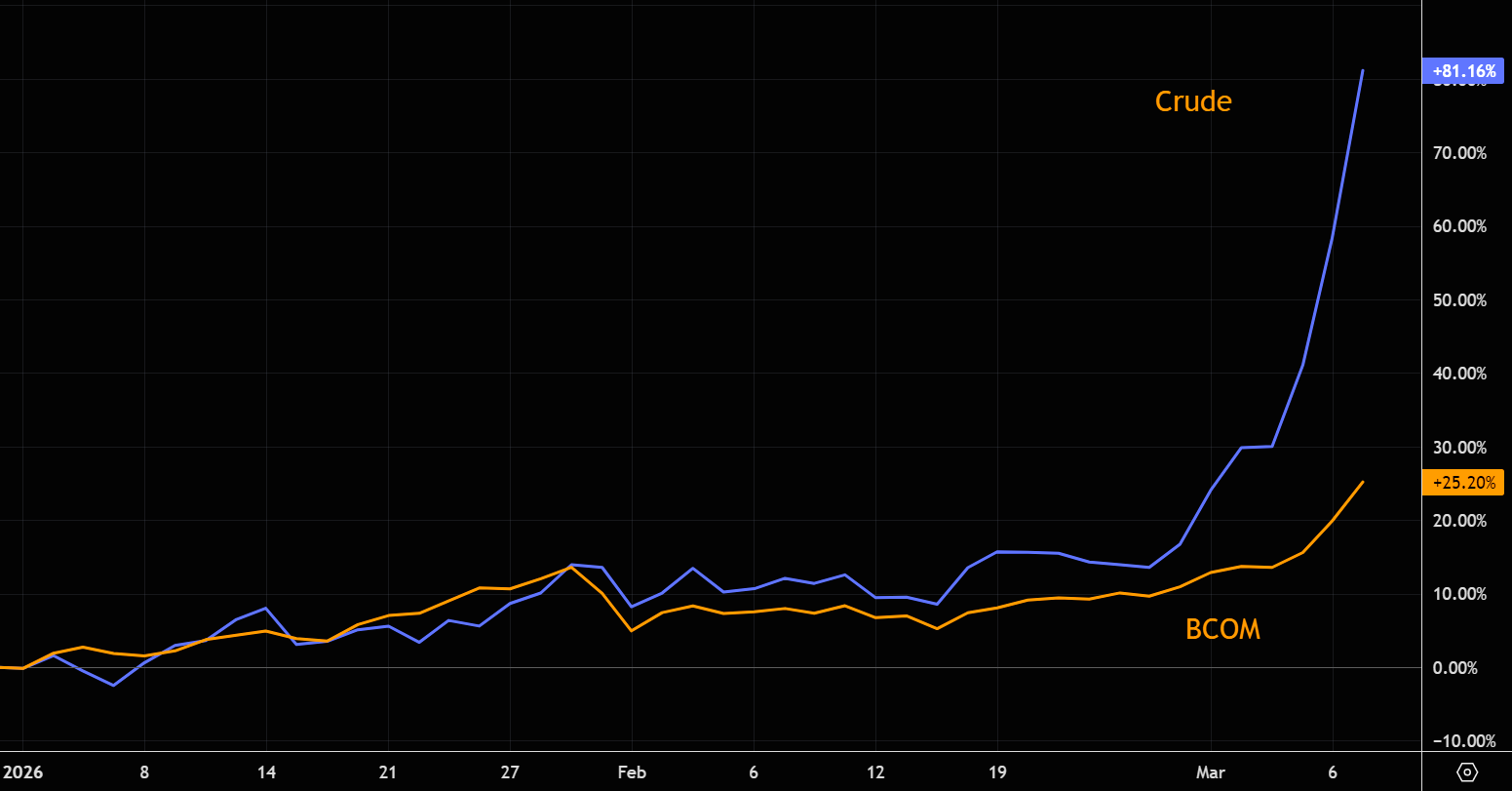
Impressive
Crude up over 80% YTD, BCOM up 25%.
Source: LSEG Workspace
The rates connection
Rates are starting to pick up the stress from oil and the broader commodity complex.