

When Oil Trades Like A Meme Stock, Something Isn’t Right
Shock therapy
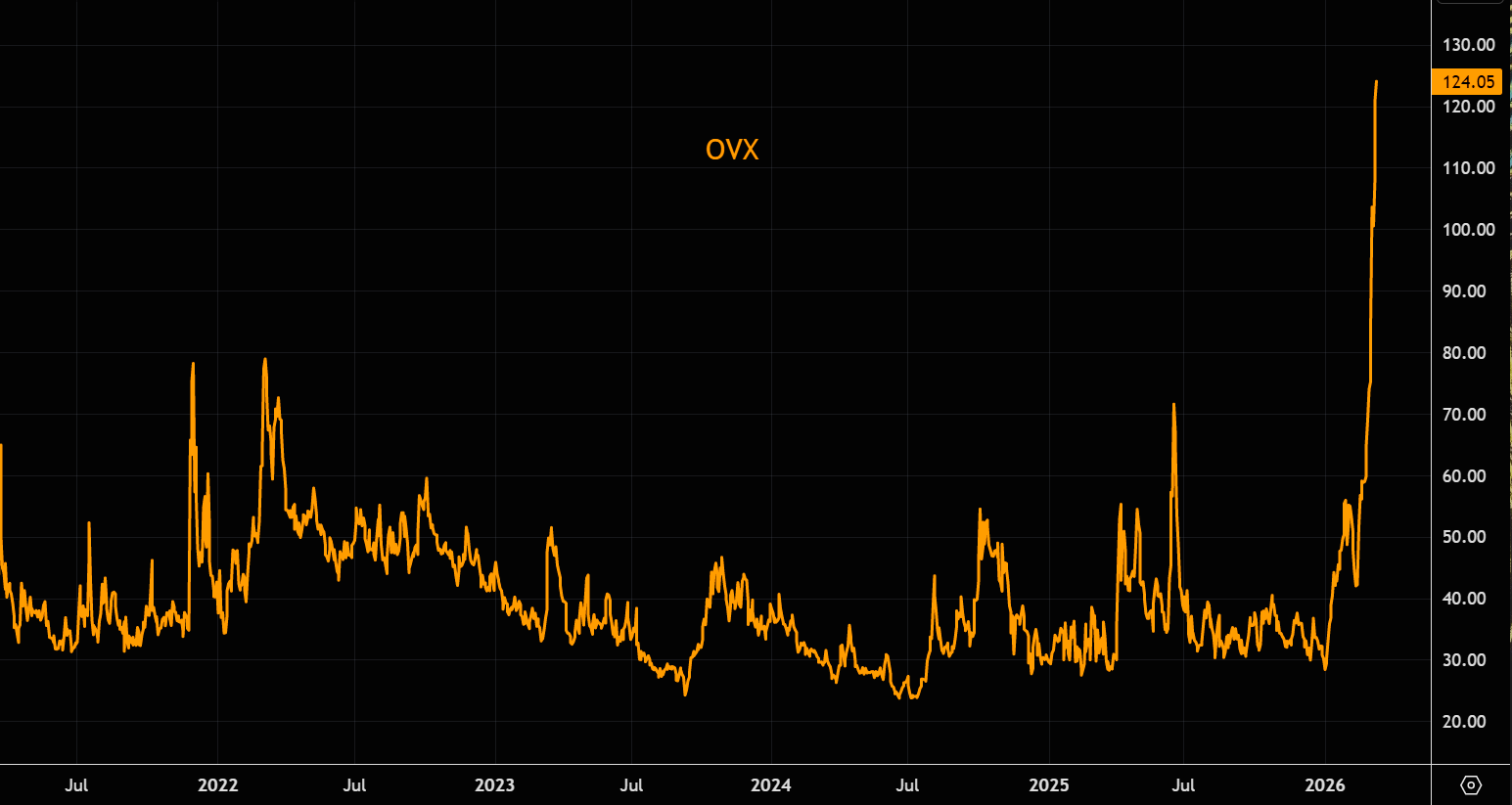
OVX is printing 125 as we write. That’s essentially a broken market for the world’s largest commodity.
A 125 volatility prices roughly 8% daily moves, which tells you everything. When oil trades like a meme stock, something isn’t right.
Source: LSEG Workspace
Steep
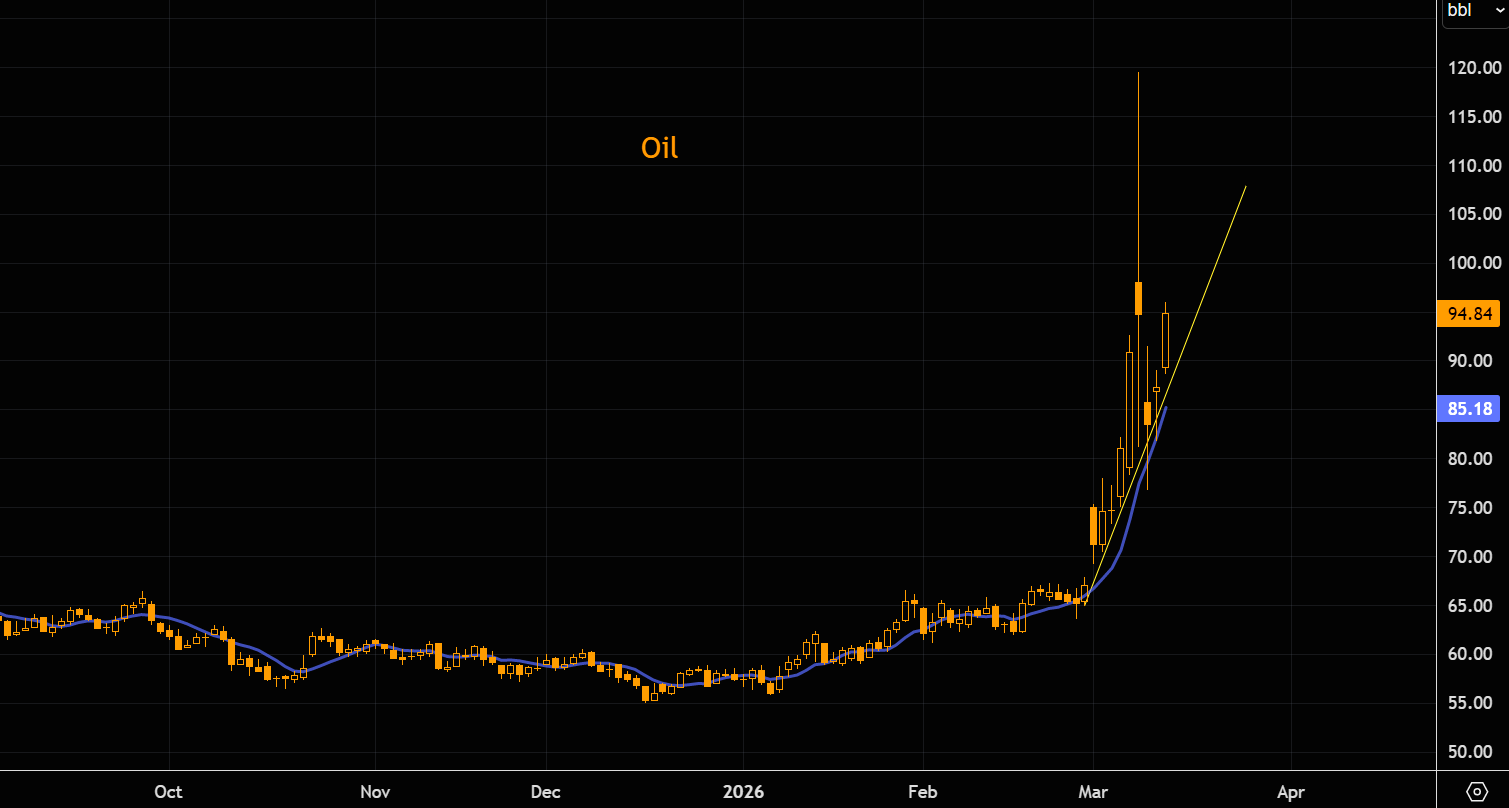
Oil bounced right at the 8-day moving average and the short-term trend line. It’s hard to chart such a volatile market, but for now the upside panic remains intact.
Source: LSEG Workspace
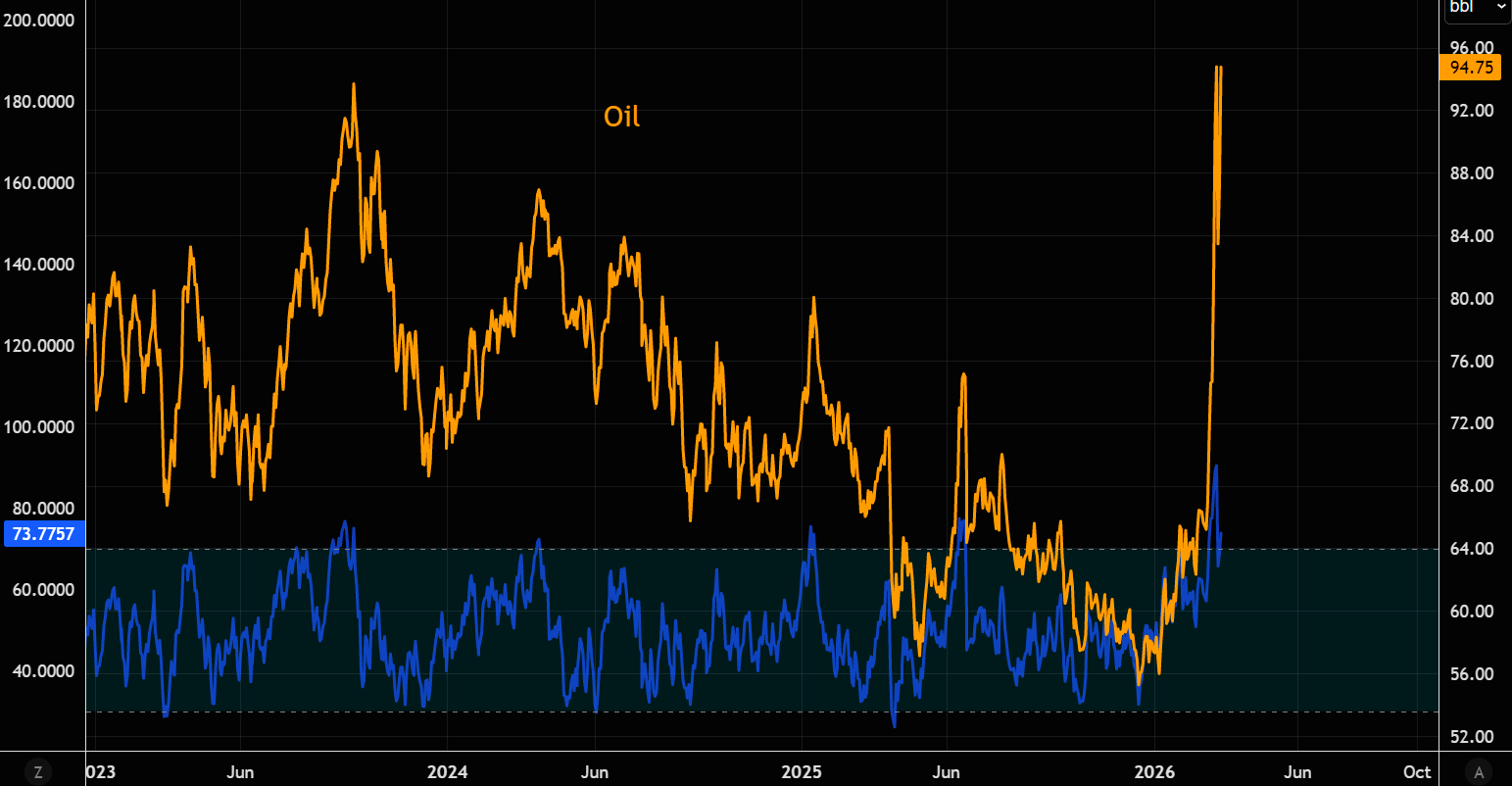
Overbought...
...but oil was much more overbought just a few sessions ago.
Source: LSEG Workspace
The 1973 crisis
1. 1973 Oil Crisis: OAPEC embargo after the Yom Kippur War caused oil prices to nearly quadruple, triggering a global recession and US CPI peaking at 12.2%.
2. Economic shock: Energy-intensive Western economies were hit hard; the S&P 500 fell over 40% and the US recession lasted 16 months (1973–75).
3. Policy response: Governments introduced measures like US speed limits, the UK “three-day week,” and later created the US Strategic Petroleum Reserve and Department of Energy.
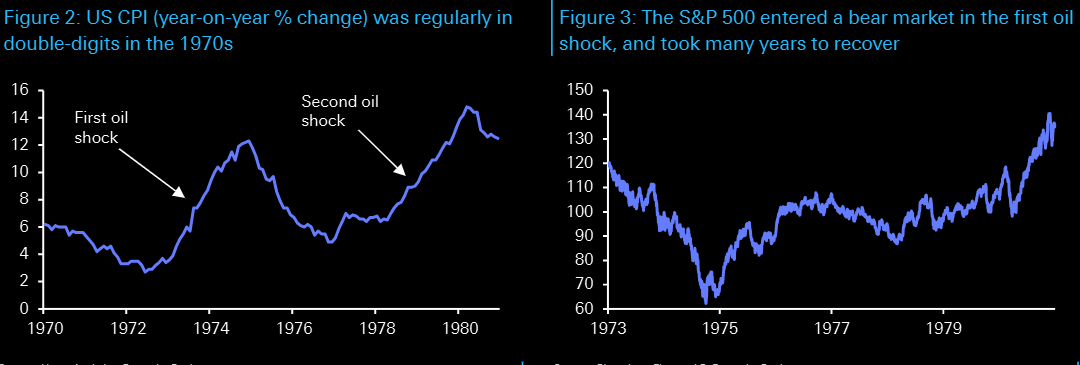
Source: DB
The 1979-80 crisis
1. 1979 Second Oil Shock: The Iranian Revolution and later the Iran–Iraq War cut oil supply, sending prices sharply higher again and pushing inflation up.
2. Volcker response: Newly appointed Fed Chair Paul Volcker responded with aggressive tightening to fight entrenched inflation, triggering another recession.
3. Long-term impact: Unlike the 1973 shock, oil prices later fell in real terms, but the crisis reshaped politics and policy, contributing to the rise of Reagan and Thatcher and lasting shifts in behaviour.

Source: DB
The Gulf war crisis
1. 1990 Oil Shock: Iraq’s invasion of Kuwait caused oil prices to more than double, pushing the US (then a net oil importer) into recession.
2. Market impact: The S&P 500 fell ~20% and the DAX dropped ~32%, while Treasury yields initially spiked before falling as the Fed cut rates.
3. Short-lived shock: Unlike the 1970s crises, the oil spike proved temporary, though it still contributed to economic weakness and political fallout (Bush losing the 1992 election).

Source: DB
The 2007-08 oil crisis
1. 2007–2008 Oil Surge: Strong demand from emerging markets, a weak dollar, and limited spare capacity pushed oil from $52 to $146/bbl by mid-2008.
2. Inflation fears: The surge triggered mounting inflation concerns, with the ECB even hiking rates in July 2008 despite growing financial stress.
3. Rapid reversal: After the Global Financial Crisis escalated, oil collapsed to $37/bbl by Dec 2008, shifting fears from inflation to deflation.

Source: DB
The 2022 energy crisis
1. 2022 Energy Shock: Russia’s invasion of Ukraine pushed Brent above $120/bbl and European gas to record highs, fueling a global inflation surge.
2. Policy response: Central banks delivered the fastest rate hikes in decades, driving recession fears and a major multi-asset selloff (S&P 500 −25% in 2022).
3. Aftermath: Energy prices gradually eased and major economies avoided deep recessions, but inflation and energy security returned as major political and economic issues.

Source: DB
Now what?
Oil shocks have repeatedly reshaped markets and economies. But the key question is how long the shock ultimately lasts.
DB sums it up well: the more sustained the rise in oil prices, the more likely it is to produce lasting economic and societal consequences. For now, markets are still pricing a relatively short-lived spike. Brent crude is around $96/bbl, while the 12-month future sits closer to $74/bbl, suggesting investors expect prices to fall once the conflict eases. That means markets are not anticipating a prolonged shock like in 2022, when oil stayed above $100 for several months, or the 1970s crises when elevated prices lasted for years.
Another important difference is that inflation was broadly near target before this shock began, unlike in the 1970s and 2022 when inflation was already high.
History shows oil shocks matter, but only if they last.
Chart shows the 1/12-month crude futures performance over the past month.